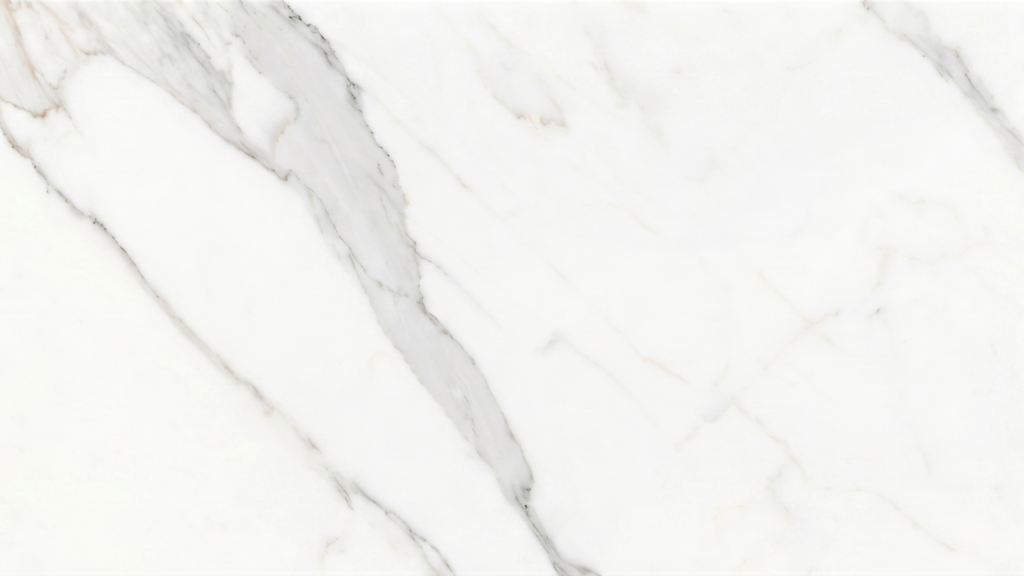
Natural stone is valued in part because no two pieces are exactly alike. That variation can be one of marble’s strongest visual qualities, but it also means a project team should review the material differently than it would a highly uniform manufactured surface.
This guide explains what to expect from natural variation, how to evaluate samples, and what to confirm before placing an order for marble tile, mosaics or trims.
What does natural variation mean?
Marble is formed through natural geological processes, so color, veining, movement and background tone can change from piece to piece. The degree of variation can also differ between collections and production lots. A sample is therefore useful for understanding the general character of a material, but it should not be treated as a guarantee that every piece in an order will look identical.
That is especially important when reviewing collections such as Calacatta Gold, Carrara, Dolomite and Thassos. Each collection should be evaluated on its own current samples and product information rather than on assumptions based only on the stone name.
Review more than one sample when possible
A single piece may show only one part of a stone’s overall range. When a project depends on a specific visual direction, reviewing several samples or a broader material representation can provide a better sense of background tone, veining and movement.
Our tile sample evaluation guide covers a practical review process for color, finish, variation and order details.
Look at the material in the actual project environment
Lighting can change how stone appears. Daylight, warm interior lighting, cool LEDs and nearby finishes may all affect the way a marble surface is perceived. Review samples next to cabinetry, countertops, paint, grout, metals and other materials that will remain in the completed space.
For larger projects, the design team may also choose to create a mockup or sample board before final approval. The goal is not to eliminate natural variation, but to understand how the selected material works with the rest of the project.
Finish changes the appearance too
The same stone can look different depending on its finish. Polished surfaces can emphasize reflectivity and visual depth, while honed surfaces generally present a softer appearance. Suitability still depends on the exact product, intended application and manufacturer or supplier guidance.
For a fuller comparison, see our polished vs. honed vs. matte tile guide.
Confirm the exact product before approving the order
Before ordering, verify the collection name, product code, size, finish and quantity. If field tile, mosaics and trims will be used together, compare them as a group rather than assuming they will be visually identical simply because they share a collection name.
Natural materials should also be reviewed with the installer or project professional responsible for the application. Confirm that the selected product and finish are appropriate for the intended location and installation system.
Plan quantity around the actual layout
Do not rely on one fixed overage percentage for every stone project. Required quantity depends on the room dimensions, tile format, layout, cuts, pattern, material variation and future-repair needs. The installer or project team should calculate the order quantity from the actual plan.
Our tile quantity and overage guide explains the factors that should be considered before the final order is placed.
Keep a record of the approved selection
For projects with multiple decision-makers, keep a record of the approved sample, collection, product code, finish and size. This can reduce confusion later when purchasing, receiving and installing the material.
If a project is being sourced through a distributor, ask about current availability and whether the material being quoted is from the same current supply being reviewed. Availability can change, so it is better to confirm current information when the order is being planned.
Choosing a natural stone supplier
A useful supplier relationship is not only about finding a stone name. It should also make it easier to review samples, confirm current product details, compare formats and finishes, and coordinate the order with the project team. See our natural stone tile supplier guide for a broader checklist.
Final review before ordering marble tile
Before approving a natural stone order, review the material in the project environment, compare more than one sample when appropriate, confirm the exact product and finish, and have the project team verify quantity and intended use. Natural variation should be expected and evaluated as part of the selection process rather than treated as a defect or surprise.
MOSAICIVE can help with product information, sample coordination, current availability and project pricing. Trade professionals can also review our Trade & Dealer Resources. Explore our tile and stone gallery for project inspiration, or contact MOSAICIVE to discuss a current project.